The Myth of the Ready Host
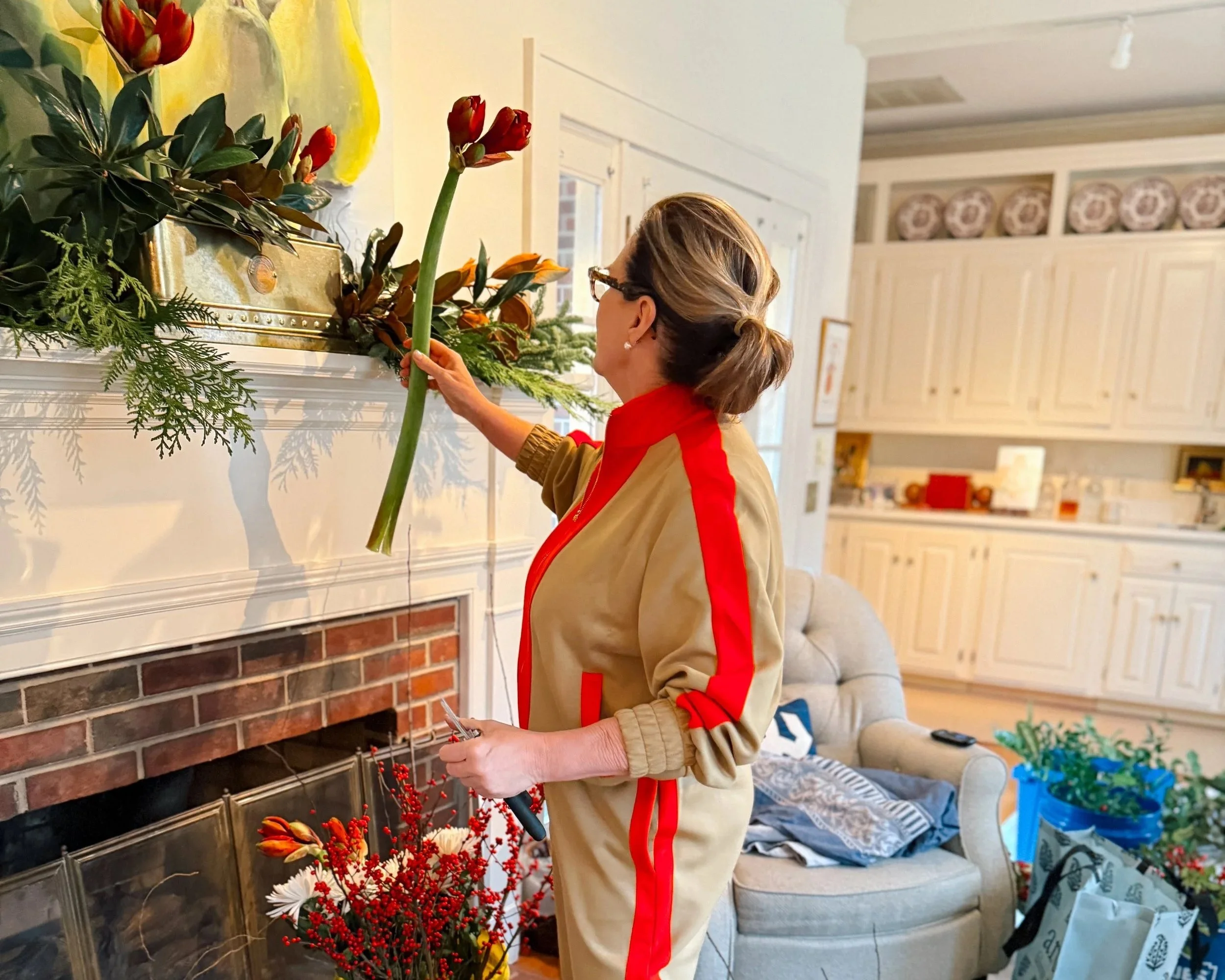
The slow work of December - greens in hand, intentions catching up behind me. Preparing the mantle for Christmas at the beautiful home of Kacky Gallotta.
December has a way of convincing us that everything must be fully formed before it is shared.
The tree must be perfect before guests arrive. The house must be in order before anyone steps inside. The table must be complete before a place is set.
And quietly, almost imperceptibly, that thinking transfers to us.
I’ll invite when I feel ready. I’ll gather when life feels calmer. I’ll open my door when I’m more confident, more rested, more put together.
But readiness has never been the price of belonging.
I see this pattern again and again—especially in women who long for connection but hesitate at the threshold. The calendar feels heavy. The house feels unfinished. The season feels demanding. And so the invitation waits. Sometimes indefinitely.
What we rarely say out loud is that “not ready” is often not about logistics at all. It’s about vulnerability. Inviting someone into your home—even for coffee—asks you to be seen in your real life. It asks you to trust that you, as you are, are enough to gather around.
And that kind of exposure never feels tidy.
Confidence is often treated as the prerequisite for hosting, but in truth it is the byproduct. The woman who waits to feel confident before she invites is waiting for a feeling that only action can produce.
The first few gatherings rarely feel graceful. They feel tentative. Slightly awkward. Imperfect. And yet, they are the very moments that teach us what grace actually looks like. Not staged, not curated—but lived.
This is especially true at Christmas. The pressure to make everything “magical” can quietly steal the magic right out of our hands. We wait for the perfect evening, the perfect menu, the perfect moment. Meanwhile, people are carrying their own fatigue, their own loneliness, their own unspoken wish to be welcomed somewhere simple.
Gathering has never required spectacle. It has always asked only for courage.
You can invite for soup instead of a meal. For dessert instead of a dinner. For a walk instead of a party. You can light a candle instead of setting a table. You can gather two instead of ten. All of it counts.
Confidence comes from learning you do not have to rise to meet the season—you can simply live inside it and bring others along with you.
When a woman stops waiting to feel ready, she begins to lead. Not loudly. Not formally. But steadily. She becomes the one who opens doors, who starts rhythms, who keeps connection moving forward even when conditions are imperfect.
And something changes in her. Not all at once. But slowly, unmistakably. She learns that she does not need a performance to be worthy of welcome. She becomes less afraid of being seen mid-process. She understands that belonging is built through repetition, not readiness.
The table has never required perfection—only presence.
And that has always been enough.